
Speedify for Linux (Ubuntu, Raspberry Pi OS) Overview
This article gives you an overview of what Speedify does on Linux, what you can use it for, and how to get up and running on Ubuntu or Raspberry Pi OS.

What is Speedify for Linux?
Speedify is a bonding VPN (Virtual Private Network) that encrypts all of your internet traffic for security and speeds it up using channel bonding technology. Channel bonding lets you use multiple internet connections at the same time, for example, a Wi-Fi connection and a wired connection simultaneously, so Speedify can combine their bandwidth for faster upload and download speeds, lower latency, and a more reliable connection overall.
Once you connect to one of Speedify's Servers, Speedify intelligently distributes your internet traffic across all available connections. That means fewer buffering issues, more stable streams, and uninterrupted downloads even if one connection drops.
What Can You Use Speedify for Linux For?
Speedify on Ubuntu and Raspberry Pi OS includes all the same core features available on other platforms:
- Secure VPN: All of your internet traffic is encrypted and routed through Speedify's Speed Servers.
- Connection bonding: Speedify can combine multiple internet connections at the same time, adding their speeds together for faster upload and download.
- Seamless failover: If your main internet connection goes down, Speedify automatically moves your active streams to another available connection, downloads and streams keep going without interruption.
- Error correction: Improves performance on unreliable or lossy connections by retransmitting lost packets.
- Redundant mode: Sends your internet traffic over multiple connections at once for maximum reliability. This is especially useful when streaming live audio or video.
- App Bypass: Starting with Speedify 17.2, you can exclude specific apps from the VPN tunnel so they use your regular connection. See Speedify App Bypass.
Running on Linux also opens up a few Linux-specific options:
- Router mode: You can configure a Linux device to act as a router and share your bonded internet connection with other devices on your network.
- Portable bonding: Running Speedify on a small device like a Raspberry Pi lets you take connection bonding with you anywhere, useful for in-real-life (IRL) streaming or working in locations with unreliable connectivity.
- TPM support: Starting with Speedify 17.2, Speedify supports the Trusted Platform Module (TPM) on Linux devices that have one.
- Automatic default route repair: Starting with Speedify 17.2, Speedify automatically repairs your device's default route if it breaks.
What You'll Need
- A desktop, laptop, mini-computer, or server running Ubuntu or Raspberry Pi OS
- A paid Speedify account (Individual, Family, or Teams plan - there is no free tier on Linux)
Let's Get Started
Step 1
Make sure your device is running a supported operating system. Speedify for Linux supports Ubuntu and Raspberry Pi OS on desktops, laptops, mini-computers, and servers.
Step 2
If you don't already have a Speedify account, sign up for a paid plan at speedify.com. Speedify for Linux requires an active Individual, Family, or Teams subscription.
Step 3
Install Speedify on your Linux device. For full installation instructions, see How to Install Speedify on Linux.
How to Control Speedify on Linux
There are three ways to configure and control Speedify on Ubuntu and Raspberry Pi OS:
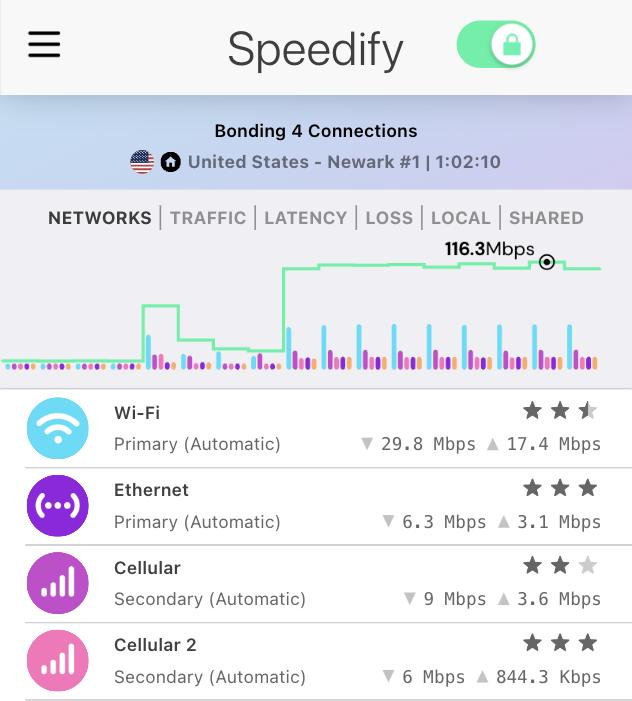
Speedify User Interface
On devices with a display, you can install the Speedify graphical user interface (the speedifyui package). This gives you the same visual interface available on Windows and macOS. See Using Speedify for a walkthrough of the interface.
Command Line Interface (CLI)
On all Linux devices, including headless servers and the Raspberry Pi, you can use the Speedify command line interface (speedify_cli ). The CLI gives you access to everything available in the graphical interface, directly from a terminal. See the Speedify Command Line Interface article for full details.
Python API
For scripting and automation, Speedify also offers an optional Python application programming interface (API). You can use it to control Speedify settings, run speed tests, log connection stats, and get notified of connects and disconnects - all from your own scripts. The package is available on GitHub.
Did you know - Speedify works on routers too, so every device on your network can benefit from faster upload and download speeds without needing to install anything on each device individually. Learn more about Speedify for Routers.