
How Speedify Works - Operation and Functionality Overview
Speedify is a bonding VPN (Virtual Private Network) that combines multiple internet connections at the same time for faster upload and download speeds, better reliability, and fewer dropped connections. This article explains the core technology and features that make Speedify work.
What Is Speedify?
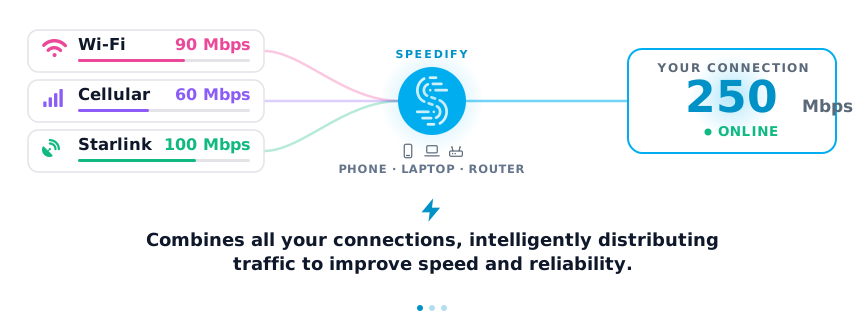
Speedify is a bonding VPN designed to combine multiple 4G/5G, Ethernt, Wi-Fi or Satellite internet connections simultaneously. Unlike traditional VPNs that route your internet traffic through a single connection, Speedify can use your Wi-Fi network, 4G/5G cellular data, Ethernet connection, and tethered devices all at once - increasing upload and download speeds and preventing interruptions.
Speedify runs in the background on your device and works with apps you're already using, including streaming platforms, video conferencing tools, web browsers, and games.
Core Speedify Architecture
Speedify's architecture has three main components that work together to deliver combined connection speeds.
The Speedify Client
The Speedify Client is the app installed on your device (computer, smartphone, tablet, or router). It acts as a VPN client and creates a virtual network interface called a TUN (Tunnel) interface.
When apps on your device send data, the internet traffic passes through this virtual interface. The Speedify Client then:
- Encrypts the data packets.
- Decides which internet connection to send each packet on.
- Transmits packets across your available connections.
This packet-level distribution allows Speedify to split even large, single-stream transfers, like video uploads or file downloads, across multiple internet connections for faster upload and download speeds.
Network Protocols
Speedify uses different network protocols to keep your device connected to Speedify's Servers. With Transport Mode set to Auto (Recommended), Speedify picks the best protocol based on network conditions and firewall restrictions:
- TCP: Best on fast, reliable connections.
- TCP Multiple: Uses several TCP sockets at once. Best on very fast networks and on networks with high latency or packet loss.
- UDP: Best on slow or unreliable connections, and for gaming and live streaming.
- HTTPS: Used when only web traffic is allowed, such as on guest Wi-Fi networks with captive portals.
This flexibility keeps Speedify working on restricted networks where other VPNs might fail.
Speedify Servers
Speedify Servers are a cloud infrastructure, they act as the connection point between your device and the internet. Once your device connects to a Speedify Server, the two work together to:
- Receive encrypted packets from all your connections.
- Reassemble packets in the correct order.
- Forward internet traffic to destination websites and services.
- Return response data back through your bonded connections.
To websites and online services, your traffic appears to come from the Speedify Server's location. Speedify offers Servers in multiple countries and regions. For business and enterprise users, Dedicated Servers provide exclusive server access for you and your team. Speedify also offers a Self-Hosted Server option.
Key Speedify Features
Channel Bonding
Channel bonding is Speedify's core technology. It allows multiple internet connections to be used simultaneously for increased throughput and redundancy. Speedify can bond:
- Wi-Fi connections
- 4G/5G cellular data
- Ethernet connections
- Tethered smartphones
- USB cellular dongles
- Bluetooth tethered devices
- Satellite connections
The Speedify Client and Servers work together to distribute packets across all active connections, then reassemble them in order on the other end.
Bonding Modes
Speedify offers different bonding modes that control how your connections are used:
Speed Mode distributes internet traffic across all connections to maximize speed. This is the standard bonding mode.
Redundant Mode sends duplicate packets across multiple connections at the same time. The first packet to arrive is used, while duplicates are discarded. This provides maximum reliability but uses more data.
Enhance Streaming is optional in Speed Mode, always on in Redundant Mode and not available in Local Load Balancer mode, optimizing streaming internet traffic. When Speedify detects streaming activity (based on port numbers, hostnames, and consistent data rates, with SRT streams identified by packet inspection), it automatically:
- Prioritizes stream packets over lower-priority internet traffic.
- Uses secondary connections to boost speeds when needed.
- Sends redundant packets if connections start dropping data, reducing jitter and improving reliability.
Local Load Balancer Mode distributes internet traffic across connections without using Speedify's VPN servers or encryption. This mode is useful for local failover scenarios but doesn't provide single-socket bonding or seamless failover protection.
Connection Priorities
Speedify's connection priority system gives you control over how each connection is used:
- Automatic: Speedify manages the connection's priority for you.
- Primary: Used first for all internet traffic.
- Secondary: Used when primary connections need additional bandwidth (in Speed Mode with bonding).
- Backup: Only used when all primary and secondary connections fail.
- Never: Speedify doesn't use the connection.
This priority system helps you manage data costs by keeping expensive connections (like 4G/5G cellular data) in secondary or backup roles while using unlimited connections as primary. You can adjust these settings in Connection Settings.
Pair & Share
Pair & Share is Speedify's cellular sharing feature. It lets multiple Speedify users on the same local network share their 4G/5G cellular connections with each other, no cables or manual hotspot setup required.
Once devices are paired:
- Each device can use the other's cellular connection.
- Sharing works bidirectionally and simultaneously.
- The more devices paired, the more internet connections available to each device.
- No additional hardware is required.
Pair & Share works like an advanced personal hotspot where all paired devices can both share and receive connections from each other.
Security and Encryption
Speedify encrypts all internet traffic between your device and the Speed Server, protecting your data from other users on the same Wi-Fi network, your ISP (Internet Service Provider), mobile carriers, and man-in-the-middle attacks on public Wi-Fi connections.
Speedify uses two encryption algorithms, selected automatically based on your device's capabilities:
- AES (Advanced Encryption Standard): Used on newer devices with hardware AES acceleration.
- ChaCha: Used on older devices without AES hardware support for fast, secure performance.
Automatic Protocol Switching
Speedify continuously monitors connection quality and adjusts behavior based on network conditions, including switching between TCP, UDP, and HTTPS protocols, detecting when connections fail, identifying streaming internet traffic, and moving traffic to working connections when others experience packet loss. These adjustments happen in real time without any input from you.
Performance Enhancing Proxy (PEP)
On routers running Speedify with a Router License, the PEP (Performance Enhancing Proxy) improves TCP internet traffic performance. PEP intercepts TCP internet traffic locally, repackages it using Speedify's optimized protocol, then reassembles it as standard TCP at the Speed Server.
Benefits include:
- Higher throughput (up to 6x faster in some scenarios).
- Lower CPU usage on router hardware.
- Better performance when bonding connections with different latencies.
PEP is particularly useful on low-power router hardware where CPU limitations can reduce throughput.
How Internet Traffic Flows Through Speedify
Here's how data moves through Speedify when you browse the web or use an app:
- An app on your device sends data, for example, requesting a web page.
- The data enters Speedify's virtual network interface.
- Speedify encrypts the data and splits it into packets.
- Packets are distributed across your active internet connections based on bonding mode and connection priorities.
- Packets travel through the internet to a Speedify Server.
- The Speedify Server decrypts and reassembles the packets.
- The Speedify Server forwards the request to the destination website.
- The website's response comes back to the Speedify Server.
- The Speedify Server encrypts and splits the response into packets.
- Response packets are sent back across your bonded connections.
- Speedify on your device receives, reassembles, and decrypts the packets.
- The data is delivered to the app that requested it.
This entire process happens at the packet level, so even a single large transfer can benefit from multiple internet connections.

Speedify's Streaming and Real-Time Traffic Optimization
When Enhance Streaming is enabled, Speedify monitors internet traffic patterns to detect streaming and real-time applications such as live streaming (YouTube, Twitch, Facebook), video conferencing (Zoom, Microsoft Teams, Google Meet), VoIP calls, and online gaming.
Once streaming internet traffic is detected, Speedify applies the following optimizations automatically:
Packet prioritization: Stream packets are marked as high priority. If bandwidth is limited, streaming internet traffic is sent before lower-priority traffic like software updates.
Adaptive bonding: Speedify uses secondary connections to boost speeds for the stream, even if those connections are normally reserved.
Automatic redundancy: If primary connections start dropping packets, Speedify automatically sends stream packets across multiple connections. The first copy to arrive is used, while duplicates are discarded, reducing jitter and improving reliability.
Cost Awareness
Speedify is designed to respect data limits on metered connections. The connection priority system lets you control which connections are used first, so you can keep 4G/5G cellular data as a backup while using an unlimited Wi-Fi connection as your primary, avoid overages on capped connections, and reserve expensive connections for emergencies.
You can set priorities for each connection in Connection Settings.
Compatibility
Speedify works with all apps on your device because it operates at the network layer, no special configuration needed. Apps continue to work as they normally would, but benefit from bonded internet connections. This includes web browsers, streaming apps (Netflix, YouTube, Spotify), video conferencing tools (Zoom, Teams, Skype), games, email clients, file transfer apps, and VoIP apps.
Did you know - If you're looking to purchase Speedify for multiple people, or need volume pricing, visit the Speedify for Teams page for more details.